
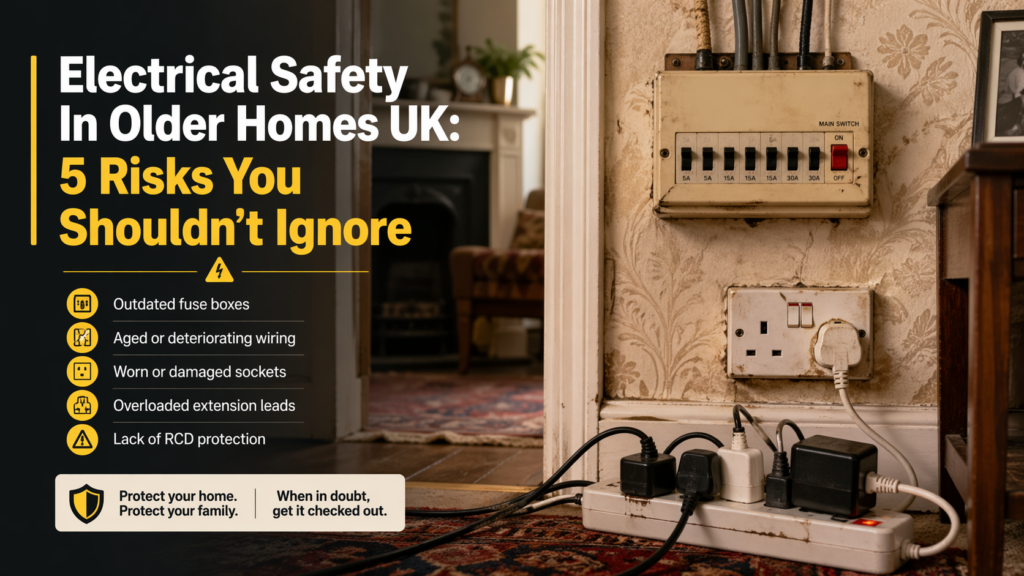
Electrical safety in older homes UK deserves closer attention because many older properties still rely on systems that were installed for a very different way of living. Today’s homes use far more power, from kitchen appliances and electric showers to home offices, chargers and entertainment systems. When older electrics have not kept pace, the result can be anything from nuisance faults to serious safety risks.
That does not mean every older property is unsafe. Many period and older homes can be perfectly sound when they have been inspected, maintained and upgraded properly. The issue is that problems are often hidden until warning signs start to appear. If you are seeing repeated tripping, flickering lights, dated fittings or signs of previous DIY work, it is worth taking a closer look. A professional electrical inspection or EICR can help you understand the condition of the system before small issues turn into costly remedial works.
Why electrical safety in older homes UK needs extra attention
Older homes often have character and solid construction, but their electrical systems may no longer match modern safety expectations. In many cases, the wiring, fuse box, socket layout and protective devices were installed decades ago, then altered over time as the property changed hands, was extended or renovated. That mix of age, wear and piecemeal changes is what makes older home electrical safety such an important issue.
For homeowners, landlords, buyers and property managers, the key is not to guess. The safest approach is to understand what is already in place, spot common warning signs early, and bring in a qualified electrician when something does not look right. AHPS Maintenance helps local property owners do exactly that, from EICR reports and fault finding to consumer unit upgrades and rewiring work.
Older properties were not designed for modern electrical demand
Many older UK properties were built at a time when electrical demand was much lower. A home may originally have had a small number of sockets, limited lighting circuits and far fewer appliances drawing power at the same time. That setup can struggle today, especially in kitchens, utility spaces, loft conversions and rooms now used as offices.
This is one of the reasons home electrical hazards UK homeowners face are often linked to older systems being pushed harder than they were ever designed for. Extension leads, adaptors and overloaded circuits can become common when the fixed electrical setup no longer suits the way the property is used.
Age, wear and historic alterations can all affect safety
Electrical systems do not stay in the same condition forever. Over time, cable insulation can deteriorate, connections can loosen, accessories can wear out, and older protective equipment can become less effective. On top of that, many older homes have been altered several times over the years, and not every change will have been completed to a good standard.
This is where older property electrics can become difficult to judge without professional input. A house might look fine on the surface, but hidden electrical faults in older homes are often found under floors, in lofts, behind walls or around extensions and outbuildings. If the property has a mix of old and newer electrical work, or there is no clear record of previous upgrades, an inspection is usually the best first step.
1. Ageing wiring is one of the biggest old wiring risks
Ageing wiring is one of the most common issues found in older property electrics. In many UK homes, parts of the system may have been installed decades ago, then patched, extended or altered over time. That can leave you with a mix of old and newer materials, inconsistent workmanship and wiring that is no longer in the condition it should be.
Older wiring does not always fail dramatically. More often, it deteriorates gradually. That is why old wiring risks are easy to miss until you start seeing repeated faults, signs of heat damage or problems during an electrical inspection.
Why old cables and insulation can become dangerous
Electrical cables rely on insulation to keep live conductors safely contained. As wiring ages, the insulation can dry out, crack, become brittle or break down. Once that starts to happen, the risk of short circuits, overheating and electric shock increases.
This is especially relevant in older homes where wiring may have been exposed to heat, moisture, movement in the building, loft storage, rodent damage or poor historic repairs. In some properties, older cable types may still be present in parts of the installation, even if some sockets or fittings look more modern on the surface.
The real concern is that damaged or deteriorated wiring is often hidden behind walls, under floors or above ceilings. A room can appear perfectly normal while the wiring supplying it is no longer in a safe condition.
Warning signs that wiring may be past its best
Several electrical warning signs suggest wiring may need attention. Some are obvious, while others are easy to dismiss until they become more serious.
Common signs include:
- lights that flicker or dim without a clear reason
- sockets or switches that feel warm
- discoloured faceplates or scorch marks
- buzzing sounds from outlets, switches or the consumer unit
- repeated tripping
- burning smells near fittings or accessories
- cracked, damaged or loose sockets and switches
- old fabric-covered, rubber or visibly deteriorated cabling where accessible
These issues do not always mean a full rewire is needed, but they do mean the system should be checked properly. If you own, manage or are buying an older property, an EICR is often the clearest way to understand the condition of the wiring and identify any remedial works.
When to repair a fault and when to rewire an old house
Not every wiring issue leads straight to a full rewire. In some cases, a localised fault can be repaired safely if the rest of the installation is still in good condition. That might apply where the issue is limited to a damaged accessory, a loose connection or a small section of cabling.
A rewire old house decision becomes more likely when the wiring is widely deteriorated, unsafe in multiple areas, or no longer suitable for the way the property is used. It is also common where there are repeated faults, signs of poor historic additions, or major renovation plans that expose large areas of the installation anyway.
The sensible first step is to get a qualified electrician to assess the system properly. AHPS Maintenance can carry out an electrical inspection, advise on whether repair or rewiring is the better option, and complete the work needed to make the property safer for the long term.
2. Outdated fuse boxes and consumer units can leave a property less protected
An older fuse box can be a weak point in an otherwise decent electrical system. Even if the wiring itself is serviceable, outdated consumer units may not provide the level of protection expected in a modern property.
This is one of the main home electrical hazards UK property owners should understand. The consumer unit is where the installation is controlled and protected. If that protection is limited or outdated, faults may not be dealt with as quickly or as safely as they should be.
What makes an older fuse box less effective than a modern consumer unit
Older fuse boxes often rely on rewirable fuses or outdated protective devices. These systems were common in older homes, but they do not offer the same level of convenience, fault detection or protection as a modern consumer unit.
Modern boards are designed to trip quickly when a fault is detected and can include RCD protection and other safety features that reduce the risk of electric shock and fire. An old fuse box may still function, but functioning is not the same as being up to modern safety expectations.
Another issue is capacity. Older boards were not designed with modern electrical demand in mind. If a property has since had a new kitchen, shower, extension, garden room or other upgrades, the old arrangement may no longer be suitable.
Signs a consumer unit upgrade may be needed
There are a few clues that an outdated consumer unit may be due for replacement or assessment.
Look out for:
- a fuse box with old-style rewirable fuses
- no clear labelling on circuits
- regular nuisance tripping
- signs of heat damage or wear
- no RCD test buttons
- a board that looks heavily modified or overcrowded
- recent renovation work completed without an electrical upgrade
A consumer unit upgrade may also be recommended after an EICR if the existing board does not provide the level of protection needed for the property.
Why this matters for safety, resale and renovation work
An outdated consumer unit matters for more than just day-to-day safety. It can also affect property sales, renovations and insurance discussions. Buyers are often more cautious when survey findings or inspections suggest outdated electrics. Landlords and business owners may also need to address issues quickly where safety compliance is involved.
During renovation work, an older board can become a practical barrier. If you are adding circuits, altering layouts or upgrading parts of the property, the existing fuse box may not be suitable to support the work safely. In many cases, upgrading the consumer unit is one of the most sensible steps before wider electrical improvements begin.
3. Lack of RCD protection is a major home electrical hazard in the UK
Lack of RCD protection is one of the most important electrical safety issues found in older UK properties. It is also one of the easiest problems to overlook. Many property owners are familiar with sockets, switches and fuse boxes, but far fewer understand whether the installation includes the kind of protective devices expected in a more modern system.
This matters because not all electrical faults behave in the same way. Some faults cause obvious problems, such as tripping or loss of power. Others are more dangerous because the risk sits in the background until someone touches faulty equipment, uses an outdoor socket in wet conditions, or comes into contact with a damaged appliance. In those situations, the right protective device can make a major difference.
In older homes, missing RCD protection often goes hand in hand with other issues such as an outdated consumer unit, old wiring risks or historic DIY electrical work. That is why it is such an important part of any electrical inspection.
What an RCD does and why it matters
An RCD, or residual current device, is designed to switch off the power very quickly if it detects an imbalance in the electrical current. In plain English, that usually means electricity is escaping the route it should be following, which can happen during a fault, damage to wiring, or contact with a live part.
Its job is to reduce the risk of serious electric shock. It can also help reduce the risk of electrical fires in some fault conditions. That makes it one of the most important safety features in a modern electrical installation.
In older properties, the absence of RCD protection does not always cause day-to-day problems that a homeowner would notice straight away. Lights may work. Sockets may still supply power. Appliances may seem fine. The danger is that the system may be less able to respond safely when something does go wrong.
This is why older home electrical safety is not just about whether the electrics still work. It is about how well the system protects people and property when faults happen.
Where missing RCD protection becomes especially risky
Missing RCD protection becomes especially concerning in areas where the consequences of an electrical fault can be more serious. Any part of the property where electricity is used near water should be treated with extra caution. Bathrooms, kitchens, utility rooms, garages, outdoor supplies and garden sockets all fall into that category.
The risk is also higher when portable equipment is used outdoors, such as lawn tools, pressure washers, or extension leads. If there is a fault in the equipment or supply, the lack of RCD protection can leave far less margin for safety.
Older rental properties and commercial premises can be particularly vulnerable too. In those settings, the people using the electrical system may have no idea how old the installation is, what has been altered over time, or whether the board provides the right level of protection. That can increase the importance of a proper EICR and any follow-up remedial works.
Where an older property has had extensions, loft conversions, kitchens upgraded or garden buildings added over the years, it is also common to find inconsistent protection across the installation. Some circuits may have been updated. Others may still reflect an older standard. That patchwork approach can create hidden gaps in safety.
What readers can check visually before calling an electrician
You should never remove covers or attempt to inspect internal electrical parts yourself. Still, there are a few visual clues that can help you understand whether the system may need professional attention.
A quick external check might include:
- whether the consumer unit has test buttons marked “T” or “Test”
- whether the circuits are clearly labelled
- whether the board looks modern or appears to be an older fuse box with rewirable fuses
- whether there are signs of damage, scorching, missing blanks or general wear around the board
- whether recent additions, such as an outdoor socket or a new shower circuit, seem to have been added to a very old setup
These checks are only a starting point. They do not confirm that the installation is safe, and they do not replace testing. If you are unsure, the best next step is to arrange an inspection. AHPS Maintenance can assess the condition of the system, confirm whether suitable RCD protection is in place and advise on any upgrades needed to make the property safer.
4. Overloaded circuits and too few sockets can put older systems under strain
Overloaded circuits are one of the most practical and common problems in older homes. They are not always caused by one major defect. More often, they happen because the property is being asked to do far more than its original electrical design ever anticipated.
This is a big part of electrical safety that UK property owners in older homes should keep in mind. An older house may have solid walls, attractive period features and plenty of usable space, but the electrics behind those walls may have been planned around a much simpler lifestyle. Once modern appliances, office equipment, chargers, entertainment systems and additional heating are introduced, the demand can increase quickly.
That extra load does not just affect convenience. It can place ongoing strain on circuits, accessories and protective devices, especially where the electrical layout has not been upgraded to suit how the property is actually used.
Why modern lifestyles can overload older electrics
Many older properties were designed with far fewer socket outlets and a much lighter pattern of electrical use. It was normal to have a limited number of appliances, fewer high-demand items and less need for constant charging or connectivity. Today, that has changed completely.
A single room may now be expected to power monitors, laptops, routers, televisions, chargers, lamps and portable heating. Kitchens often carry the heaviest demand of all, with kettles, microwaves, washing machines, dishwashers and other appliances all competing for supply. Add an electric shower, underfloor heating or outdoor power, and the overall demand rises further.
If the socket layout has not kept pace, people tend to adapt the space around the electrical limitations. Multi-plug adaptors, extension leads and trailing cables become a normal part of daily life. That may seem manageable, but it can mask a larger issue. The property is effectively relying on temporary workarounds instead of a fixed electrical system that suits the real level of demand.
This is where overloaded circuits become a wider safety concern rather than just an inconvenience.
Practical warning signs of overloaded circuits
An overloaded circuit often gives warning signs before it fails or becomes dangerous. The problem is that many of those signs are easy to dismiss because they seem familiar or manageable.
Some of the most common signs include:
- sockets that are always full, with adaptors used permanently
- extension leads running across rooms as a long-term solution
- repeated tripping when several appliances are used together
- lights dimming or flickering when heavier equipment is switched on
- plugs, leads or sockets that feel warm
- a particular room or area struggling when demand increases
- older circuits that seem fine until extra appliances are added
- scorched outlets, buzzing fittings or a faint burning smell
These are clear electrical warning signs that the system may be under strain. In some cases, the issue is the number of appliances being used at once. In others, it reflects poor circuit design, deterioration in the wiring, an outdated consumer unit or a mix of all three.
When extra sockets are not enough on their own
It is tempting to assume that the answer is simply to install more sockets. Sometimes that is part of the solution, but it is not always enough on its own. If the existing circuit is already overloaded, or if the underlying wiring is ageing and in poor condition, adding more outlets without addressing the wider setup may only spread the demand rather than solve it properly.
This becomes especially important during property renovation electrics work. A new kitchen, garage conversion, loft room or home office often changes how the space is used, which means the electrical design may need to change too. The question is not just where sockets should go. It is whether the circuit arrangement, cable condition and level of protection are still suitable for the property.
In some cases, the right answer is a modest upgrade with additional properly installed socket points. In others, the property may need new circuits, a consumer unit upgrade or wider rewiring work to support the intended use safely. That is why professional assessment matters. AHPS Maintenance can identify whether the issue is simple overload, poor layout, ageing infrastructure or a combination of all three, then recommend the safest next step.
5. Poor DIY electrical work and historic alterations can create hidden dangers
Poor DIY electrical work is one of the most unpredictable risks in older properties because it is often hidden behind otherwise ordinary finishes. A socket may look neat from the front. A light fitting may appear to work normally. A garage, extension or loft room may seem fully usable. But once testing begins, electricians often uncover alterations that were never completed properly, never tested properly, or were simply not suitable from the start.
This is one of the reasons electrical faults in older homes can be difficult to judge without a professional inspection. The age of the property is only part of the picture. What often causes the biggest issues is what has been changed over time, especially where improvements were carried out in stages by different owners, different trades or unqualified installers.
The kinds of poor-quality alterations electricians often find
Historic alterations can take many forms. Some are minor examples of bad practice. Others present genuine safety concerns. It is common to find added sockets, lighting changes, extensions and outbuilding supplies that were connected into the system without proper design, testing or certification.
Examples electricians often come across include loose terminations, badly routed cables, overloaded spurs, unsafe junctions hidden beneath floors, mixed cable ages and types, borrowed connections between circuits, makeshift additions to lighting circuits and accessories fitted without suitable earthing or protection.
There are also cases where previous work has been concealed well enough to avoid notice until a fault develops. This is especially common in older homes that have been extended, altered room by room, or updated during quick refurbishments. The visible finish may look modern, while the hidden work behind it is inconsistent or unsafe.
That is why older property electrics should never be judged purely on appearance.
Why hidden electrical work can cause bigger problems later
Hidden electrical work becomes more dangerous over time because faults can sit unnoticed for years. A loose connection may generate heat slowly. A poorly installed joint may deteriorate under repeated load. An added circuit may seem to function well enough until a renovation, appliance upgrade, or heavier everyday use exposes the weakness.
This delayed effect is what makes DIY electrical work so problematic in older homes. The issue is not always an immediate failure. It is the uncertainty it creates across the whole installation. If one part of the system has been altered badly, there may be other hidden defects elsewhere that only become visible during testing or when a more serious fault develops.
These problems can also complicate future work. A homeowner might plan a new kitchen, updated lighting or a consumer unit upgrade, only to discover that older alterations need remedial works first. Buyers and landlords can face the same issue when an EICR reveals a history of mixed-standard electrical work that was not obvious during a viewing.
Why professional certification matters
Professional certification matters because it gives property owners confidence that electrical work was tested, recorded and completed to the right standard at the time. It creates a clear trail for future maintenance, helps support safety and provides reassurance when a property is sold, rented or refurbished.
Without that paperwork, it becomes much harder to know what has been done properly and what has not. That does not mean every undocumented alteration is automatically unsafe, but it does mean assumptions should be avoided. In older homes, that uncertainty alone is often enough reason to arrange an electrical inspection.
For landlords and business owners, certification is even more important because there are wider safety responsibilities to consider. For homeowners and buyers, it is valuable because it helps avoid hidden costs and last-minute surprises later on.
If a property has signs of piecemeal updates, older extensions, unusual socket layouts or unexplained faults, an EICR is usually the best first step. AHPS Maintenance can inspect the installation, identify poor historic alterations, explain any issues in plain English and carry out the remedial works needed to bring the system up to a safer standard.
Warning signs that an older property may need urgent electrical attention
Some electrical issues can wait for a booked inspection. Others need much faster attention. In older properties, the difficulty is that warning signs are often dismissed as part of the building’s age, especially if the fault comes and goes. In reality, repeated electrical problems are often the clearest signal that the installation needs urgent assessment.
If you notice any of the signs below, it is sensible to stop relying on guesswork and speak to a qualified electrician as soon as possible.
Urgent electrical warning signs include:
- burning smells near sockets, switches, light fittings or the consumer unit
- scorch marks, discolouration or melted plastic around outlets or accessories
- repeated tripping, especially if it happens without a clear cause
- buzzing, crackling or humming from sockets, switches or the fuse box
- lights flickering or dimming regularly
- sockets or switches that feel hot to the touch
- electric shocks or tingling when using switches or appliances
- exposed wiring, damaged cable insulation or loose fittings
- signs of water ingress near electrical points
- a fuse box that appears damaged, heavily altered or unsafe to use
These problems do not always mean the property needs a full rewire, but they do mean the system may no longer be safe to leave unchecked. In an older home, they can point to anything from overloaded circuits and loose connections to deteriorated wiring, poor historic alterations or lack of proper protection.
The safest next step is to have the installation assessed properly. AHPS Maintenance can carry out an electrical inspection, identify the cause of the issue and advise whether you need a repair, remedial works, a consumer unit upgrade or more extensive rewiring.
Do you need an inspection, a repair, a consumer unit upgrade or a full rewire?
In older properties, the right answer depends on the condition of the installation, not just the age of the building. Some homes need a straightforward repair. Others need a safer consumer unit, targeted remedial works or more substantial rewiring. The key is to avoid guessing, especially if there are repeated faults, visible warning signs or no clear record of past electrical work.
A lot of property owners worry that one issue automatically means a full rewire. In reality, that is not always the case. A proper inspection helps separate local faults from wider system problems, so you can make a sensible decision based on safety, cost and how long you plan to keep or use the property.
When an EICR is the right first step
An EICR is usually the right first step when you are unsure about the overall condition of the electrics. It is particularly useful in older homes, properties with a dated fuse box, buildings with signs of previous alterations, and homes being bought, sold, let or renovated.
It gives you a structured assessment of the fixed electrical installation rather than relying on appearances alone. That is important in older properties, where serious issues can sit behind walls, under floors or inside outdated boards without obvious day-to-day symptoms.
It is also the clearest starting point when you want to know whether the property needs minor remedial works, a consumer unit upgrade, or a wider rewire. AHPS Maintenance can carry out an EICR, explain the findings in plain English and help you prioritise the next step without overcomplicating the process.
When a repair may be enough
A repair may be enough when the issue is isolated, and the wider installation is still in decent condition. That could include replacing damaged accessories, correcting a local fault, repairing a loose connection or dealing with one problematic section of wiring.
This tends to apply where the rest of the system tests reasonably well and there is no sign of widespread deterioration. In those situations, targeted remedial works can improve safety without moving straight into major disruption.
The important point is that a repair should solve the real fault, not just hide the symptom. If a socket is overheating or a circuit keeps tripping, the cause still needs to be identified properly. In older properties, repeated quick fixes can create a false sense of security while the wider problem remains.
When a consumer unit upgrade may be recommended
A consumer unit upgrade is commonly recommended when the board is outdated, lacks suitable RCD protection, shows signs of wear, or is no longer suitable for the current setup in the property. It is also a common recommendation where the existing fuse box has older rewirable fuses or where previous additions have left the board overcrowded or poorly arranged.
In practical terms, this often makes sense where the wiring is still usable, but the level of protection is not where it should be. Upgrading the board can improve safety, make faults easier to manage and provide a better foundation for future electrical work.
It is also a common step before renovation work. If you are planning a new kitchen, loft conversion, home office, outdoor power supply or other electrical additions, the existing board may need to be brought up to a more suitable standard first.
When a partial or full rewire may be the safer long-term option
A partial or full rewire may be the safer option when problems are more widespread. That is often the case where wiring is significantly aged, insulation is deteriorating, circuits have been altered badly over time, or the property no longer has an electrical layout that suits modern use.
It can also make sense during major renovation work. If walls and floors are already being opened up, dealing with unsafe or outdated wiring at the same time is often the most practical long-term choice. It reduces the need for repeat disruption later and helps bring the installation into line with the way the property will actually be used.
A full rewire is not a box-ticking exercise. It is usually about long-term safety, reliability and making sure the property has a sound electrical foundation. If AHPS Maintenance finds that repair work would only offer a short-term fix, we will say so clearly and explain why a partial or full rewire is the better investment.
UK compliance points to explain in simple language
The practical compliance points below are based on England, which is the area AHPS Maintenance serves. The exact legal route can differ elsewhere in the UK, but the core safety message is the same: older electrics should not be left to chance.
What homeowners and buyers should know
For homeowners, the biggest point is that electrical work in dwellings must meet the safety requirements covered by Part P of the Building Regulations in England. The official guidance also explains when work needs to be notified and confirms that design, installation, inspection, testing and provision of information all matter, not just the finished appearance of the job.
For buyers, the practical takeaway is simple. Do not assume an older property is fine because the lights come on or the décor looks modern. If the home has been extended, refurbished or altered over time, ask what electrical paperwork exists and consider an inspection before exchange or as early as possible in the purchase process.
What landlords should know
In England, landlords must have the electrics in rented properties checked at least every five years by a properly qualified person. Current government guidance also says landlords must give tenants proof that installations have been inspected and tested.
If the report identifies remedial or further investigative work, that work must usually be completed within 28 days, or sooner if the report says so. Government guidance also says landlords must provide the report to new tenants before occupation, provide it to prospective tenants within 28 days of a request, and provide it to the local council within 7 days if asked.
For landlords with older stock, this is where delay often becomes expensive. A dated board, poor historic alterations or unresolved faults can turn a routine inspection into urgent remedial work. Booking an EICR early gives you more control over timescales and budget.
What business owners should know
For business owners, the legal position is broader. HSE guidance says the Electricity at Work Regulations 1989 are relevant to work activities and premises, and that electrical equipment must be maintained to prevent danger. HSE also states that the type and frequency of checks, inspections and testing depend on the equipment, the environment and the results of previous checks.
In plain English, that means there is no one standard answer for every workplace. A small office, a workshop, a retail unit and a mixed-use property do not all carry the same level of risk. Older premises, heavier usage, visible defects and previous ad hoc alterations all increase the need for proper assessment and a sensible maintenance plan.
For commercial property owners and managers, the safest route is usually to start with a professional inspection, deal with any faults properly, and keep clear records of the work carried out. That is especially important if staff, tenants, contractors or customers are using the building regularly.
Buying or renovating an older property? Here’s the safest approach
If you are buying or renovating an older property, treat the electrics as a core part of your decision-making, not an afterthought. It is very common for older homes to have a mix of original wiring, later additions and undocumented changes. Some of those may be perfectly serviceable. Others may only come to light once the work starts.
The safest approach is to inspect first, plan second and open up the property with proper electrical advice in place. That gives you a better understanding of what can stay, what should be upgraded and what is likely to cause problems later. It also helps prevent situations where a kitchen refit, loft conversion or decorative renovation is delayed because the underlying electrics are not safe enough to support the new layout.
It is also worth thinking beyond the immediate fault. If you are already improving the property, this is often the best time to address outdated electrics properly. New sockets, new lighting and a better layout can be planned alongside any remedial works, consumer unit upgrade or rewiring that makes the home safer for the long term.
For buyers, landlords and renovators alike, clarity is what saves money and stress. AHPS Maintenance can inspect older property electrics, highlight any risks in plain English and help you decide whether the right next step is an EICR, a repair, a board upgrade or more extensive rewiring.
Keep older properties safe with the right electrical advice
Older properties can be excellent homes and sound investments, but older electrics need the right level of attention. Ageing wiring, outdated fuse boxes, missing RCD protection, overloaded circuits and poor historic alterations are all common issues in older UK buildings. The good news is that they can usually be identified and dealt with properly before they become bigger problems.
The most important thing is not to rely on assumptions. If a property has repeated faults, dated electrics, unclear paperwork or signs of previous alterations, getting professional advice early is the safest move. In many cases, one inspection can give you a much clearer picture of what is urgent, what can be planned, and what level of work is actually needed.
AHPS Maintenance helps homeowners, landlords, buyers and property managers make sense of older property electrics with clear inspections, EICR reports and practical follow-on work. If you want to understand the condition of an older installation, arrange an inspection or explore AHPS Maintenance’s wider electrical services and get the right advice before small faults turn into bigger risks.
Old Property Electric FAQs
How do I know if an older house needs rewiring?
A rewire is more likely if the property still has very old cabling, repeated electrical faults, visible damage to accessories, or a history of piecemeal alterations. Common warning signs include dated rubber, fabric or lead-insulated cables, frequent tripping, flickering lights, burning smells and sockets or switches that feel warm. An EICR is usually the clearest way to confirm whether the wiring needs local repairs, a partial rewire or a full replacement.
Is an old fuse box unsafe?
An old fuse box is not automatically unsafe, but it can leave a property less protected than a modern consumer unit. Older boards often lack the safety features found in newer setups, and some very old fuse boxes may need replacing altogether. If the board looks dated, has rewirable fuses, lacks RCD protection or shows signs of wear, it is worth having it assessed by a qualified electrician.
What are the most common old wiring risks in UK homes?
The most common old wiring risks in UK homes are ageing cable insulation, loose or deteriorated connections, outdated fuse boxes, missing RCD protection, overloaded circuits and poor-quality historic alterations. These issues can increase the risk of electric shock, overheating and fire, especially where the installation has not been inspected or updated for many years.
How often should landlords have electrics checked in England?
In England, landlords must have the fixed electrical installation in private rented properties inspected and tested at least every five years by a properly qualified person. If the report identifies remedial work or further investigation, that work must usually be completed within 28 days, or sooner if the report requires it.
What is the difference between a consumer unit upgrade and a full rewire?
A consumer unit upgrade replaces the board that controls and protects the circuits, which can improve safety where the existing fuse box is outdated but the wiring itself is still broadly serviceable. A full rewire goes much further and replaces some or all of the wiring, along with accessories and often the consumer unit too. The right option depends on the condition of the installation as a whole, not just the age of the board.
Can poor DIY electrical work fail an inspection?
Yes. Poor DIY electrical work can fail an inspection if it creates safety issues, does not meet the expected standard, or includes defects that need further investigation or remedial work. An EICR is designed to identify damage, wear, non-compliance and anything that could lead to electric shock or dangerous temperatures, so badly altered or undocumented work is often picked up during testing.
What warning signs suggest an electrical problem is urgent?
Urgent warning signs include burning smells, buzzing or crackling, repeated tripping, scorching around sockets or switches, electric shocks, hot fittings and signs of overheating or water damage near electrical points. These problems should not be ignored, especially in older properties, because they can point to faults that need prompt professional attention.
Should I get an electrical inspection before buying an older house?
Yes, it is often a very sensible step. Older homes can have hidden wiring issues, outdated boards or undocumented alterations that are not obvious during a viewing. An electrical inspection helps identify damage, wear, safety concerns and parts of the installation that do not meet current expectations, which can help you understand likely costs and risks before or soon after purchase.
Can overloaded sockets be a fire risk in older properties?
Yes. Overloaded sockets and extension leads can overheat and may cause a fire, particularly where high-demand appliances are involved, or the electrical setup is already under strain. In older properties with fewer sockets and older circuits, this risk is often higher because temporary adaptors and extensions are used as a permanent workaround.