
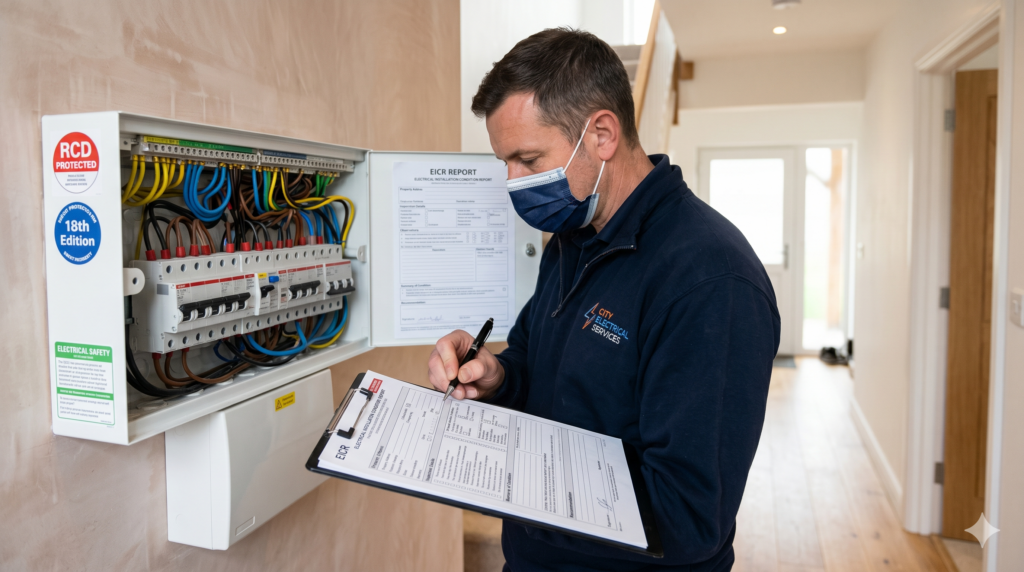
If you need to know how often an EICR is required in the UK, the answer depends on the type of property and what your last report says. As a guide, owner-occupied homes are often checked every 10 years, rented properties usually follow a 5-year cycle, and commercial premises may need inspection more often if the environment, usage, or previous report indicates a shorter interval.
An EICR is a safety check of your property’s fixed electrics. It helps identify wear, damage, poor past alterations, and issues that could lead to shock or fire risk. If you need professional advice or a local inspection, AHPS Maintenance provides EICR Reports for homeowners, landlords, and businesses across Hertfordshire.
An Overview Of EICR Frequency By Property Type
| Property type | Typical EICR frequency | Legal requirement? | What can shorten the interval? |
|---|---|---|---|
| Owner-occupied home | Every 10 years | Usually no specific legal requirement for routine intervals | Older wiring, signs of damage, property purchase, renovations, or a shorter recommendation on the last report |
| Rented property | Every 5 years | Yes, in most cases for landlords, subject to the rules in the relevant UK nation | A shorter interval stated on the last report, damage, change of tenancy context, or remedial issues |
| Commercial property | Often every 5 years as a starting point | Duty to keep electrical systems safe, but no universal one-size-fits-all interval | Heavy use, harsher environments, frequent alterations, older installations, or a shorter reinspection date on the last report |
| Higher-risk environments | More often than 5 years in many cases | Safety duties still apply | Workshops, kitchens, industrial use, moisture, heat, dust, vibration, or high electrical demand |
What Is An EICR & Why Does It Matter?
An EICR, short for Electrical Installation Condition Report, is an inspection and test of a property’s fixed electrical installation. It is designed to check whether the system is safe for continued use and to identify damage, wear, deterioration, or non-compliance with current safety standards.
What An EICR Checks
An EICR focuses on the fixed parts of the electrical system, not everyday portable appliances. That usually includes the wiring, sockets, switches, light fittings, the consumer unit, and permanently connected items such as extractor fans or electric showers.
In simple terms, the electrician is looking for problems such as:
- deterioration over time
- unsafe alterations or poor past workmanship
- overloaded circuits
- inadequate earthing or bonding
- components that no longer meet the required safety standard
- signs of damage that could lead to shock or fire risk
Why Regular Inspections Are Important
Electrical systems age quietly. Much of the installation is hidden behind walls, above ceilings, or inside cupboards, so issues can develop long before they are visible. Regular inspections help spot those problems early and reduce the risk of electric shock, fire, nuisance tripping, and expensive reactive repairs.
For landlords and business owners, regular inspection is also part of meeting safety responsibilities. For homeowners, it is usually best practice rather than a blanket legal duty, but it is still a sensible step if you want confidence that the electrics are safe.
How Often Do Homeowners Need An EICR?
For an owner-occupied home, the commonly recommended interval is every 10 years. It is also sensible to arrange an inspection before buying a previously occupied property, before selling if concerns have been raised, or when there is any reason to doubt the condition of the electrics.
That 10-year figure is guidance, not a one-size-fits-all rule. A newer home that has been well-maintained may comfortably follow that cycle. An older property with dated wiring, repeated faults, or an unknown electrical history may need checking sooner. If you want a broader assessment of your home electrics alongside an EICR, you can view our trusted electrician services.
When A Homeowner Should Book Sooner Than 10 Years
You should not wait for the 10-year mark if there are warning signs or a clear trigger for inspection. Common examples include:
- you have just bought an older home
- the property has not had an electrical report for many years
- you are planning a renovation or major upgrade
- circuits trip regularly
- sockets or switches show signs of heat damage
- lights flicker for no obvious reason
- parts of the system appear outdated or have been altered over time
If you notice burning smells, sparking, or a sudden loss of power to part of the installation, that moves beyond routine testing and may need urgent attention & emergency electrical repairs.
How Often Do Landlords Need An EICR In The UK?
For rented property, the answer is usually every 5 years, but the legal wording and framework vary across the UK. The safest approach is to treat 5 years as the baseline, check the rules for the nation your property sits in, and always follow any shorter interval stated on the last report.
England
In England, landlords in the private rented sector must have the electrical installation inspected and tested by a qualified person at least every 5 years, obtain a report, and provide it to tenants and local authorities if requested.
The 2025 update extended the regulations to the social rented sector as well, but for most readers, the key point is simple: private rented homes need a valid electrical inspection at least every five years.
If the report says the next inspection should take place sooner than 5 years, that shorter interval applies.
Scotland
In Scotland, private landlords must meet the Repairing Standard, and official guidance states that an EICR should be completed every 5 years. Scottish tenancy guidance also reflects a 5-year electrical safety inspection cycle.
That means Scottish landlords should work on the same practical assumption as England in most cases: keep a valid EICR in place, review the report date carefully, and act sooner if the electrician recommends a shorter interval.
Wales
In Wales, the Renting Homes framework requires landlords to make sure there is a valid electrical condition report during each period of occupation. The regulations tie that validity to a maximum 5-year cycle, unless the report itself says the next inspection should happen sooner.
So, in practical terms, Welsh landlords should also treat 5 years as the standard outside limit, while remembering that the report can shorten that period.
Northern Ireland
Northern Ireland now has specific Electrical Safety Standards for Private Tenancies Regulations. These came into operation on 1 April 2025, with existing private tenancies needing to be compliant by 1 December 2025. The inspection cycle is at least every 5 years.
For landlords in Northern Ireland, that makes the position much clearer than before. A valid EICR is no longer just good practice for private tenancies. It is part of the legal framework.
How Often Do Businesses And Commercial Properties Need An EICR In The UK?
For commercial properties, there is no one-size-fits-all legal timetable that suits every premises. The priority is keeping the electrical installation safe and preventing deterioration from creating risk. In practice, many businesses use 5 years as a starting point, but that can be too long for premises with heavy use, harsher conditions, frequent alterations, or older electrics.
If you run a workshop, kitchen, care setting, or other high-demand environment, it is better to work from your last report and a competent electrician’s recommendation than to rely on a generic rule.
Commercial Settings That May Need More Frequent Inspection
Higher-risk commercial environments often need a shorter inspection cycle. HSE guidance makes clear that the frequency of checks and testing depends on the environment, how equipment is used, and previous results. In practice, that can mean more frequent inspection for places such as:
- workshops and industrial units
- kitchens and hospitality settings
- medical or care environments
- damp, dusty, corrosive, or outdoor locations
- buildings with heavy daily use or frequent alterations
Why “Risk-Based” Matters For Business Owners
A risk-based approach matters because two business premises can look similar on paper while having very different electrical demands. A quiet office and a busy workshop should not always be treated the same way. HSE guidance consistently points back to use, environment, deterioration, and previous inspection results when deciding how often testing is needed.
For business owners, that means the safest and most defensible approach is to keep records, follow the previous EICR recommendation, and shorten the interval if the environment is hard on the installation.
What Can Change How Often An EICR Is Needed?
The date on a generic checklist is not the only date that matters. EICR frequency can change because of the report itself, changes to the property, changes in use, or remedial works carried out after the inspection.
If The Previous EICR Recommends A Shorter Interval
This is one of the most important points in the whole topic. If your electrician recommends a shorter reinspection period, that becomes the date you should follow. This can happen where the installation is older, the environment is harsher, or the overall condition suggests a shorter cycle is safer.
If Remedial Work Has Been Carried Out
Remedial work does not automatically mean you can forget about future testing. It may make the installation safer, but the next inspection date still needs to be reviewed properly. In some cases, the original EICR date will still stand. In others, further certification or a fresh inspection may be needed depending on the scope of the work.
If the inspection highlights issues around an old fuse board, you may need to upgrade your consumer unit.
Signs You May Need An EICR Sooner
Even if your report is not technically due yet, some warning signs should not be ignored. Electrical systems tend to give clues when something is wrong. Repeated tripping, overheating sockets, buzzing, damaged accessories, flickering lights, or visible signs of poor past alterations all justify a closer look.
The same applies if you have no clear record of the last inspection. No paperwork, uncertain dates, or vague answers from a previous owner or contractor are all good reasons to book an EICR sooner.
Older Properties And Recently Purchased Homes
Older homes often contain hidden electrical history. That can include old consumer units, outdated earthing arrangements, ageing cable insulation, or layers of alterations added over many years. Electrical Safety First specifically recommends periodic inspection before buying a previously occupied property.
So if you have just bought a house, especially an older one, booking an EICR early can give you a clearer picture of what is safe, what needs improvement, and what should be budgeted for next.
Is an EICR a Legal Requirement?
An EICR can be a legal requirement, but not for everyone.
For a standard owner-occupied home, there is generally no blanket rule saying you must have an EICR every 10 years, but it is still widely recommended as good safety practice.
For landlords in private rented property, the answer is often yes, with nation-specific legal duties across England, Scotland, Wales, and Northern Ireland.
For businesses, the legal duty is to maintain electrical systems so they do not become dangerous, which is why inspections are usually driven by risk, environment, and competent advice rather than one universal date.
Legal Requirement vs Recommended Best Practice
The easiest way to think about it is this:
- Landlords: often a legal requirement to have a valid report on the required cycle.
- Homeowners: usually recommended best practice, especially every 10 years and when buying an older property.
- Businesses: legal duty to keep electrical systems safe, with inspection frequency based on risk and competent judgement.
How Long Does An EICR Last In The UK?
An EICR is really a snapshot of the installation’s condition at the time it is inspected and tested. In practical terms, it lasts until the next inspection date stated on the report, provided the installation has not materially changed, and there are no new concerns in the meantime.
That means one property might have a recommended reinspection date in 10 years, another in 5 years, and another much sooner. The “life” of the report depends on the property type, the relevant legal framework, and the electrician’s recommendation.
What Happens If An EICR Finds Problems?
If an EICR finds problems, the report will classify them using standard codes and then state whether the overall installation is satisfactory or unsatisfactory for continued use. Some findings are advisory. Others need urgent action.
Common EICR Outcome Codes In Simple Terms
The main codes are:
- C1: danger present. Immediate action is required.
- C2: potentially dangerous. Urgent remedial work is needed.
- FI: further investigation required. Something may be unsafe, but more work is needed to confirm the issue.
- C3: improvement recommended. This does not usually make the report unsatisfactory on its own, but it means the installation could be brought up to a better standard.
Which Findings Make The Report Unsatisfactory?
A report is unsatisfactory if it includes C1, C2, or FI observations. A C3 on its own does not normally make the report unsatisfactory.
That matters because an unsatisfactory outcome usually means you need remedial work, urgent make-safe work, or further investigation before the installation can be treated as safe for continued use.
What To Do Next
Start by reading the report carefully and looking at the codes against each observation. Then speak to a qualified electrician about the scope of work needed and the order it should be tackled in. If the issue is dangerous, it should be made safe immediately.
For landlords, act quickly and check the national rules that apply to your property. In England’s rented sector, for example, remedial work or further investigation generally needs to be completed within 28 days, or sooner if the report specifies a shorter period.
How To Prepare For An EICR
Preparing for an EICR is usually straightforward. The main aim is to make the inspection easier, safer, and more efficient.
A few practical steps help:
- make sure the electrician can access the consumer unit, sockets, and fixed electrical points
- clear obstructions from areas that may need to be checked
- gather any previous EICRs, electrical certificates, or records of recent remedial work
- let tenants or staff know if there may be temporary disruption
- mention any ongoing faults, nuisance tripping, flickering lights, or damaged accessories before the inspection starts
If you already know there are urgent faults, deal with those upfront rather than treating the EICR as a substitute for emergency attendance.
When Should You Book An EICR?
If your inspection date is approaching, your last report recommends a shorter reinspection period, or you have concerns about the condition of the electrics, now is the right time to act.
AHPS Maintenance provides professional EICR Reports across Hertfordshire, along with follow-on support for remedial work, upgrades, and wider electrician services.
Need a clear answer on your property? Contact AHPS Maintenance to arrange an EICR and get practical advice you can use.